

How to Measure MSP Performance (And What Metrics Actually Matter)
.png)
Once the keys to your infrastructure are handed over it may feel like the success or failure of your IT operations is entirely dependent on your Managed Service Provider. While that may be partially true, continuously collaborating and evaluating MSP performance ensures their services remain aligned with your goals. Reviewing service metrics, tracking Key Performance Indicators (KPIs) and evaluating Service Level Agreement adherence helps organizations maintain accountability and improve service delivery. Quarterly Business Reviews provide a structured opportunity to assess results, discuss challenges and strengthen alignment between the MSP and the business.
How to Measure MSP Performance
Evaluating MSP performance requires consistent tracking of service metrics and operational outcomes. Organizations typically review these metrics through structured meetings such as Quarterly Business Reviews where performance against SLAs and KPIs is discussed.
Key components of MSP performance measurement include:
Quarterly Business Reviews (QBRs)
These structured meetings review the MSP’s performance during the previous quarter and evaluate whether service delivery aligns with business objectives.
Performance Metrics and KPIs
- System uptime and availability
- Incident response time
- Incident resolution time
- First call resolution rate
- Ticket volumes and support trends
- Customer satisfaction scores such as CSAT or NPS
Documentation and Reporting
- Performance reports summarizing service metrics
- Trend analysis highlighting improvements or issues
- Utilization reports and ticket analytics
Issue and Challenge Reviews
- Identification of recurring technical issues
- Root cause analysis for major incidents
- Client feedback regarding service delivery
These evaluation methods provide objective data that help organizations determine whether their MSP is delivering consistent and reliable results.
Key Benefits of Tracking MSP Performance Metrics
Improved Service Accountability
Monitoring KPIs and SLA adherence ensures the MSP is meeting defined service commitments such as uptime guarantees and response times.
Data Driven Decision Making
Performance metrics provide objective insight into operational health. Reviewing trends over time helps organizations identify improvement opportunities and service gaps.
Better Strategic Alignment
Quarterly Business Reviews allow organizations to share upcoming initiatives, technology goals and operational changes that may impact IT requirements.
Operational Efficiency and Cost Optimization
Performance discussions often uncover opportunities to improve workflows, introduce automation or reduce unnecessary technology spending.
Stronger IT Resilience
Tracking incident response times and root cause analysis outcomes helps prevent recurring outages and improves the reliability of infrastructure operations.
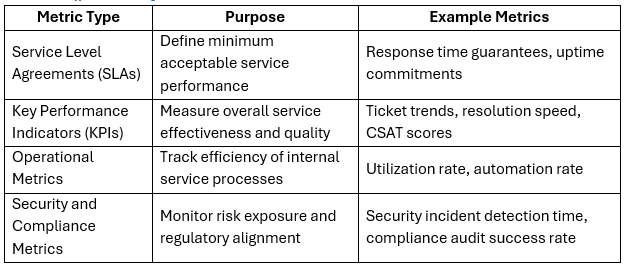
SLA Metrics vs KPI Performance Indicators
How to Evaluate and Apply MSP Performance Reviews
Organizations benefit most when performance reviews are prepared in advance.
- Review previous Quarterly Business Review reports
- Collect examples of incidents or service issues
- Verify SLA adherence independently where possible
- Analyze KPI trends across multiple reporting periods
- Gather feedback from IT managers or engineers impacted by the service
During performance discussions it is important to approach the meeting as a collaborative review rather than a confrontational audit. This encourages productive dialogue and ensures both parties focus on improving service delivery.
If a major outage occurs, a Root Cause Analysis should be conducted to identify the underlying cause and define corrective actions. This documentation ensures that the issue does not repeat and strengthens operational reliability.
Key Takeaways
- Quarterly Business Reviews help evaluate MSP performance and maintain alignment with business goals
- Tracking KPIs provides objective insight into service delivery quality
- Regular SLA reviews ensure response time and uptime commitments are being met
- Root Cause Analysis helps identify and prevent recurring operational issues
- Clear documentation and performance reporting strengthen accountability between the business and the MSP
FAQ
What are the most important KPIs for MSP performance?
Common MSP KPIs include system uptime, incident response time, incident resolution time, first call resolution rate and customer satisfaction metrics such as CSAT or NPS.
How often should MSP performance be reviewed?
Most organizations review MSP performance quarterly through structured meetings known as Quarterly Business Reviews (QBRs).
What is the difference between KPIs and SLAs?
Service Level Agreements define the minimum performance standards the MSP must meet, while Key Performance Indicators measure overall service effectiveness and operational quality.
What happens if an MSP breaches an SLA?
SLA breaches should be documented and reviewed through a Root Cause Analysis. The MSP should identify the cause of the issue and implement corrective actions to prevent recurrence.
Why are Quarterly Business Reviews important for MSP partnerships?
Quarterly Business Reviews allow organizations to evaluate performance metrics, review service trends, discuss challenges and align IT strategy with future business goals.
%20(1).png)
Popular reads below:
.png)
How to Transition to a New MSP Without Disruption - The MSP Onboarding Blueprint

.png)
How MSPs Safeguard Businesses Against Modern Cyber Threats

What to Look for in a Service Level Agreement (SLA) When Hiring an MSP

Top 5 Security Mistakes Companies Make Before Hiring an MSP

10 Red Flags That Your MSP Isn’t Delivering True Value

Managed Services vs Break-Fix: How Reactive IT Creates Higher Costs and Operational Strain


