

How MSPs Safeguard Businesses Against Modern Cyber Threats
.png)
As technology has become ubiquitous in business operations, the importance of cybersecurity and regulatory compliance has grown dramatically. Attack vectors continue to evolve and bad actors now leverage advanced techniques to execute threats more quickly and efficiently. Managed Service Providers play a critical role in helping organizations navigate these complex challenges, manage risk and strengthen overall security posture.
How MSP Cybersecurity and Risk Management Work
Within IT operations, risk management means identifying vulnerabilities, evaluating potential impact and taking steps to mitigate those risks to safeguard the organization. Effective cybersecurity requires a proactive approach that protects critical systems from compromise or disruption caused by cyber threats or human error.
MSPs strengthen cybersecurity through:
- Continuous monitoring of networks, devices and systems
- Advanced threat detection techniques
- Proactive identification of suspicious activity
- Comprehensive risk assessments
- Vulnerability testing across applications and infrastructure
- Implementation of data encryption and access controls
- Ongoing logging, auditing and compliance management
By leveraging exposure across multiple industries and environments, MSPs anticipate challenges before they become critical incidents. Their collective experience allows them to identify blind spots and apply best practices that enhance resilience and reliability.
Key Benefits of MSP Cybersecurity Partnerships
Proactive Threat Identification
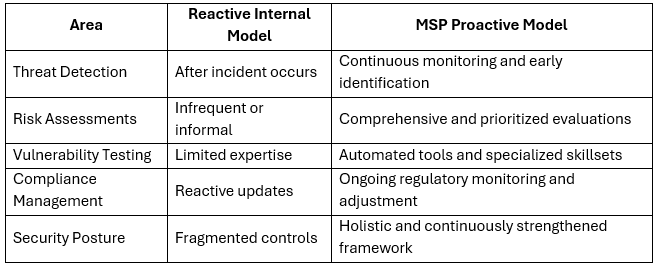
Instead of reacting after damage occurs, MSPs identify vulnerabilities before they escalate into major incidents. This proactive approach reduces downtime and preserves customer trust.
Comprehensive Risk Management
MSPs assess hardware, device security and software configurations to prioritize risks based on business impact. This structured methodology strengthens organizational risk mitigation strategies.
Advanced Vulnerability Testing
Through automated tools and manual techniques, MSPs uncover improper configurations, unpatched security flaws and outdated systems. Addressing these gaps minimizes cyber threats and improves defensive posture.
Regulatory Compliance Support
MSPs guide businesses through complex governance requirements such as HIPAA, PCI DSS and GDPR. They implement safeguards including encryption, access controls and auditing processes to maintain compliance standards.
Strengthened Security Posture
By developing holistic security policies and continuously adapting to regulatory changes, MSPs help businesses reduce overall risk exposure and build a resilient security posture.
Reactive Security vs Proactive MSP Cybersecurity
How to Prepare for an MSP Cybersecurity Partnership
Organizations strengthen outcomes when preparation begins before engagement.
- Evaluate current security policies and identify gaps
- Conduct an internal risk assessment review
- Document compliance requirements by industry
- Identify areas requiring encryption, access control and logging
- Assess current vulnerability testing practices
These steps create alignment and accelerate MSP implementation while reinforcing long-term cybersecurity resilience.
Key Takeaways
- MSP cybersecurity partnerships reduce risk exposure through proactive monitoring and mitigation
- Comprehensive risk management strengthens IT resilience and reliability
- Vulnerability testing identifies weaknesses before exploitation
- Regulatory compliance management prevents financial penalties and operational disruption
- Holistic security posture development supports long-term business continuity
FAQ
How do MSPs protect businesses from cyber threats?
MSPs provide continuous monitoring, proactive threat detection and structured risk mitigation strategies that prevent vulnerabilities from escalating into major incidents.
What is the role of risk management in cybersecurity?
Risk management involves identifying vulnerabilities, evaluating potential impact and implementing safeguards that protect critical systems and maintain operational stability.
How do MSPs support regulatory compliance?
MSPs implement encryption, access controls, logging and auditing processes while conducting regular compliance assessments to ensure alignment with standards such as HIPAA, PCI DSS and GDPR.
What is vulnerability testing and why is it important?
Vulnerability testing identifies improper configurations, unpatched security flaws and outdated systems so organizations can remediate weaknesses before exploitation.
Why is proactive cybersecurity important in modern environments?
As attack vectors become more advanced, proactive cybersecurity enables early detection, faster mitigation and stronger long-term protection.

Popular reads below:
.png)
How to Transition to a New MSP Without Disruption - The MSP Onboarding Blueprint
.png)
How to Measure MSP Performance (And What Metrics Actually Matter)
%20(1).png)

What to Look for in a Service Level Agreement (SLA) When Hiring an MSP

Top 5 Security Mistakes Companies Make Before Hiring an MSP

10 Red Flags That Your MSP Isn’t Delivering True Value

Managed Services vs Break-Fix: How Reactive IT Creates Higher Costs and Operational Strain


